Current Postdocs
-
Research Interests
- speech security and privacy
- speaker verification and diarization
- speech production
- machine learning
Information
- Email: zlin [at] ieee [dot] org, lzhan268 [at] jh [dot] edu
- CV: https://drive.google.com/file/d/1slwz-cf1kk7qjG2eD3Teb2F-7WKAo5yH/view?usp=sharing
- Office: Hackerman 323
Bio:
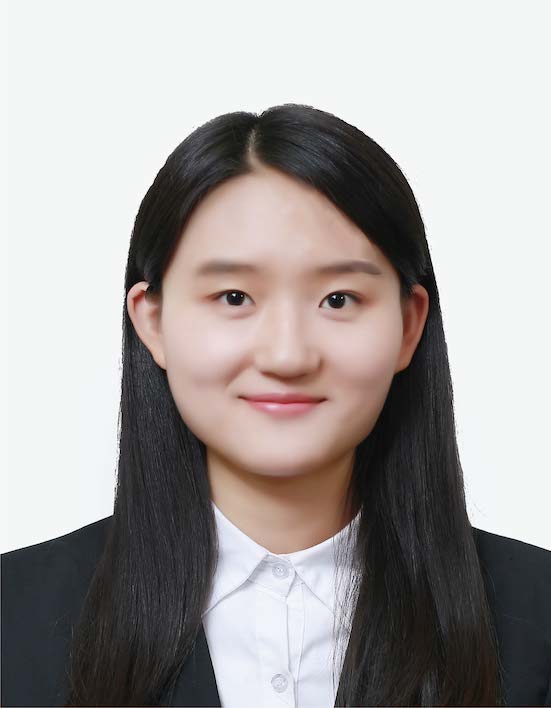
Lin Zhang is currently a Postdoctoral Fellow at the Center for Language and Speech Processing, Johns Hopkins University, USA. She received the M.S. degree from Tianjin University, Tianjin, China, in 2020, and the Ph.D. degree from the Graduate University for Advanced Studies / National Institute of Informatics, Tokyo, Japan in 2024. She has also visited and/or worked at Brno University of Technology and Duke Kunshan University. Her research interests include speech security and privacy, speaker verification and diarization, speech production, as well as machine learning.
-
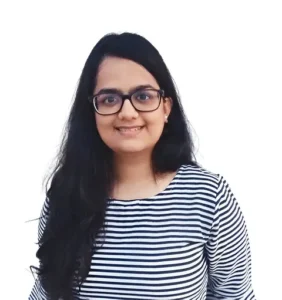
Research Interests
- AI Safety
- LLM Evaluations
- Human-AI Alignment
- ASR
- Speaker ID
Information
- Email: sjoshi12 [at] jh [dot] edu, sonal [dot] joshi [dot] mail [at] gmail [dot] com
- CV: https://sonal-ssj.github.io/
- Office: DSAI @ Mt Washington 338
Bio:
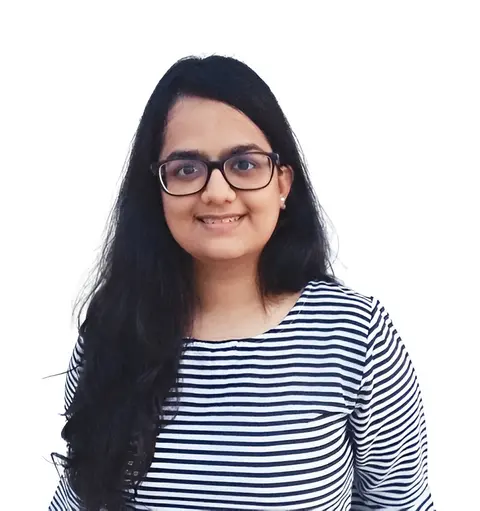
- Currently Postdoctoral Fellow at the Center for Language & Speech Processing, with Prof. Mark Dredze. I lead AI safety evaluation for an ARPA-H funded medical chatbot project.
- When a patient asks something like “Can I take ibuprofen?”, the answer can carry hallucinations (confidently wrong information) or omissions (a clinician would flag that something critical is missing).
- My work involves extensive collaboration with domain experts (clinicians), and across engineering and research, to optimize the whole pipeline — from data annotation, to improving the AI detectors (LLM-as-judge + RAG), to closing the loop where clinicians and AI disagree.
- Why it’s hard: humans and AI don’t fail the same way. Sometimes they flag completely different errors, which means alignment itself is still an open problem, even for a single medical answer.
- PhD (Johns Hopkins University), in speech AI, advised by Prof. Najim Dehak. I built defenses against attacks on speech systems under a worst-case setup: attackers knew our defense completely, while we knew nothing about theirs. Our systems were top-ranked in DARPA evaluations (GARD and RED), stress-tested by teams from Two Six Technologies, MITRE, and IBM.
- The path here: It began with an M.Tech at IIT Jodhpur (thesis on speaker identification), then two years at TCS Research & Innovation, and during my PhD, a summer interning with the Microsoft Speech team. Along the way I’ve published widely and hold two US patents (see my publications).